

News under AI: Coordination is the next cycle of value
In Reshuffle, Sangeet Paul Choudary reframed one of the most hyped technologies of our time not as a smarter brain, but as a better glue. Every read of AI you hear right now is an automation read. Faster, better, cheaper. A productivity tool for work that already exists. But that distracts us from what's truly possible.
How AI’s "Original Sin" is Strip-Mining the Architecture of Reality
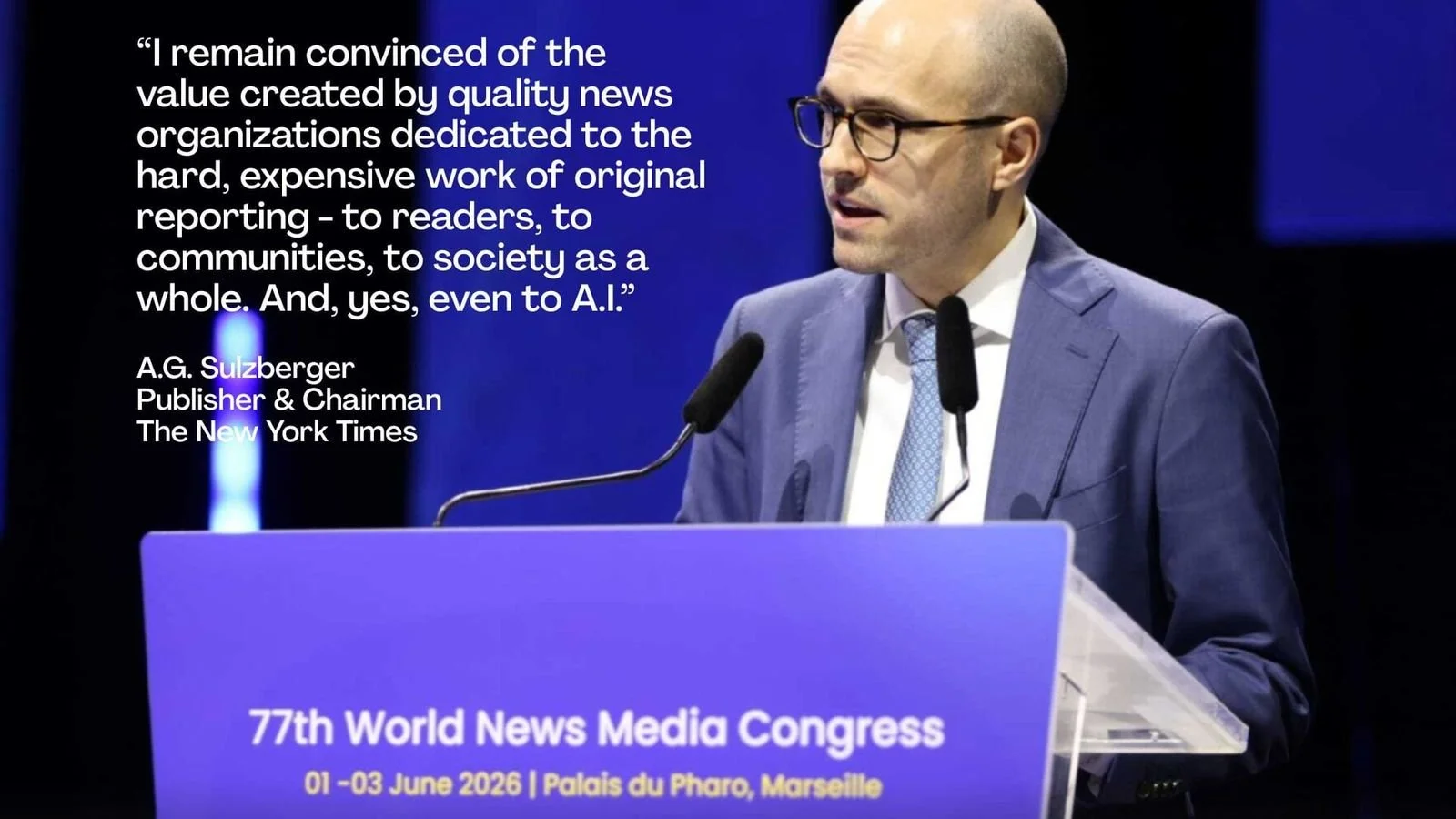
At the WAN-IFRA World News Media Congress, A.G. Sulzberger, publisher of The New York Times, warned that the longstanding agreement between tech platforms offering distribution in return for content produced by others has been unilaterally broken. We are moving from an era of imperfect cooperation to one of digital exploitation, where fact-based, first-hand reporting, the foundation of the “public square”, is being consumed by the very technologies it supports.

Beyond the Chatbot: Navigating the Reinvention of Information
In March 2026, David Caswell and Shuwei Fang convened forty of the world’s leading technologists and publishers at Harvard’s Shorenstein Center for the "Signals at Scale" summit. The consensus was sobering: we are currently trapped in an “efficiency phase,” using AI merely to polish legacy workflows. Participants identified this as a strategic dead end that ignores the $5 trillion infrastructure investment currently rewiring the global information architecture.

Why the Future of AI Depends on Protocols, Not Just Platforms
The rapid development of Artificial Intelligence requires a change in how regulators and industry leaders govern and shape market structures. Tim O’Reilly and the AI Disclosures Project examine the shift from static information disclosures to functional, protocol-based systems that shape the "agentic economy."
Standards are the invisible infrastructure of AI
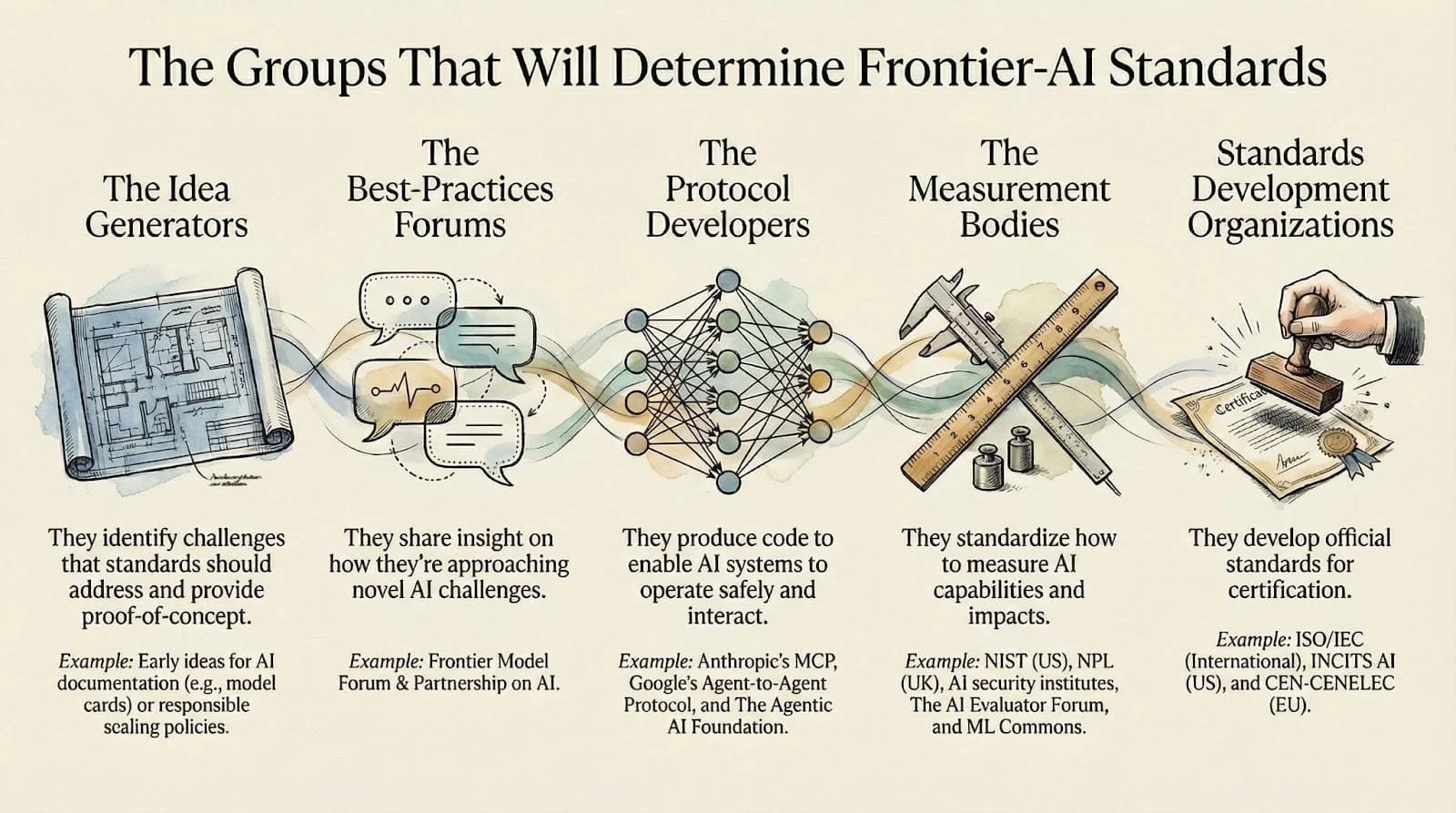
Standards are not merely bureaucratic "alphabet soup"; they are the invisible blueprints that determine whether a frontier technology serves as a foundation for growth or a trap for future failure. We thrive when we can cooperate on the basics rather than constantly negotiating them. Fundamentally, a standard represents the collectively agreed method for implementing technology. It is the specification that enables interoperability, such as allowing a nut from one manufacturer to fit a bolt from another. Historically, such specifications have quietly underpinned major human achievements.

Expanding the Publisher’s Customer Surface in the AI-casting Era
The shared incentives that once supported quality journalism during the era of navigational and transactional search are now being replaced by AI-native exploratory queries. This change does more than just lower website traffic; it makes the old publisher acquisition funnel outdated. We are moving away from traditional "Broadcasting" (one-to-many) and "Webcasting" (many-to-many) models, where audiences consume uniform, scheduled artefacts that create shared cultural touchpoints but offer limited personalisation and no agency - the new buzzword. Instead, a disruptive new “many-to-one” paradigm is emerging: what the start-up Alien Intelligence defines as “AI-Casting”.
The Nordic High-Trust Model is Defying the Digital Gravity of Big Tech
The Nordic region is widely seen as a global role model for democratic health and media freedom. While many countries face increasing polarisation and digital disruption, these five nations have maintained notable social cohesion. However, they are also experiencing the shift from traditional print revenue to platform-driven models influenced by Big Tech. According to Nordicom's Nordic News Media Landscapes 2025 report, digitalisation has created a more level global environment, but news remains closely tied to language. These linguistic differences help protect the Nordic Model, as global platforms struggle to match the value of localised, culturally specific reporting.

Media is Now a "Front" for High-Margin Businesses
A dominant trend in 2026 is the use of media brands to drive frequency and brand recognition for more lucrative, non-media business lines. The most resilient media companies have realised they are no longer in the business of selling attention to the highest bidder. Instead, they operate as sophisticated content marketing engines for more dynamic, high-margin products. The newsroom provides the brand and the frequency of interaction, but the real profit is generated elsewhere. In this model, the media wing effectively functions as a content marketing engine for dynamic data or utility services.
The Rise of the "Accidental" News Consumer
80% of Americans believe that being informed is a civic duty for voting, but only 11% think following the news is "extremely important" to being a good member of society. Meanwhile, the idea of "the news" as a destination is fading. We are witnessing the rise of the "Accidental News Consumer," a group that no longer actively seeks information but instead stands in the rain, hoping to get wet. The split is now nearly identical: 50% of U.S. adults still actively seek out news, while 49% say they mostly "happen to come across it." This isn’t just a trend; it’s a generational replacement. For the under-30 crowd, passive consumption is the totalising reality, with 73% stating that news simply finds them.

Davos 2026: The Quiet Comeback of Tokenization adds to Content Provenance in Media
Over the past three years, ‘AI fever’ has acted as a powerful gravitational well, diverting media attention from the blockchain sector. But as the 2026 World Economic Forum in Davos made clear, this silence was deceptive. While the public was obsessed with LLMs, global finance was engaged in discreet, tedious structural work necessary to move from speculative pilot projects to institutional reality. This reality could serve as a catalyst, create a ripple effect, and lay essential foundations for the adoption of a decentralised ledger infrastructure that certifies content provenance and safeguards intellectual property in the media.
Democracy under algorithms: how the attention market is fragmenting our shared world
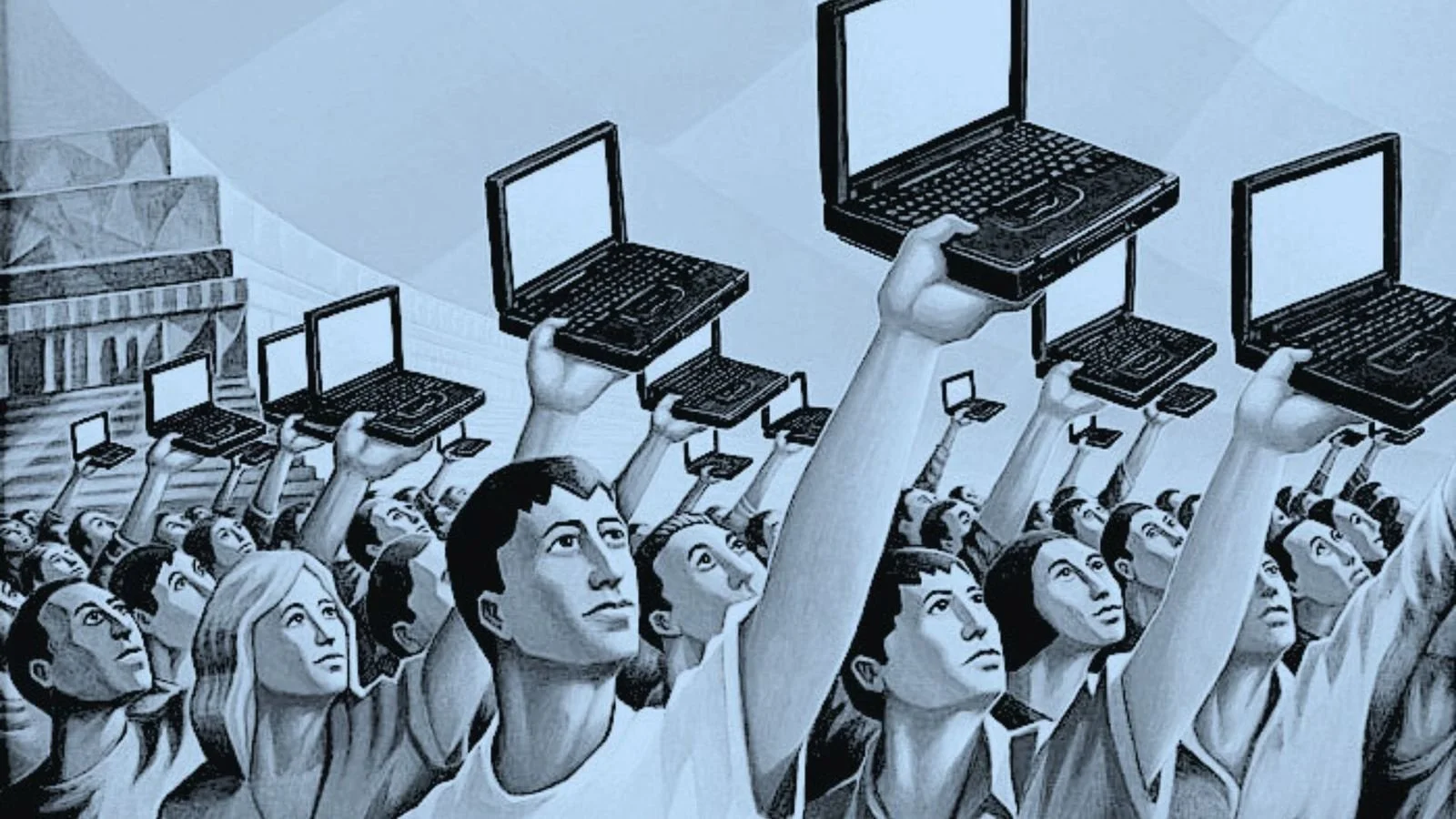
Under the growing influence of algorithms on the democratic sphere, the public debate has shifted from a space of public debate and regulated traditional media to social networks governed by the economic laws of the "attention economy" aimed at maximising time spent on platforms. This transition from a deliberative public space to one governed by the ‘attention market’ is not neutral. It is a commercial virus that has literally drilled down the democratic layer, contaminating the exercise of citizenship with mechanisms designed for advertising optimisation.
The future sends warnings. Those who notice first get ahead
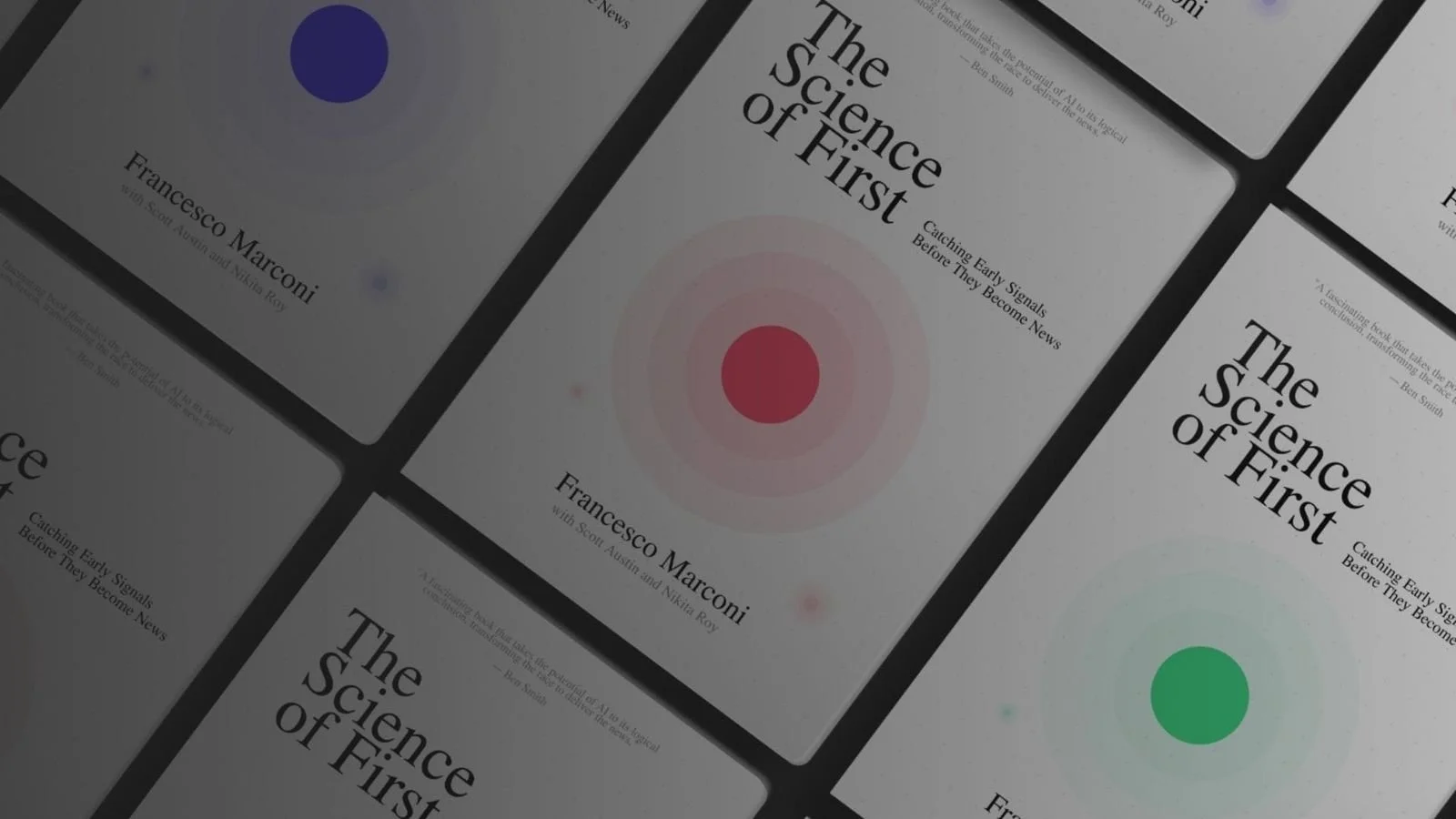
Detecting early signals is vital in a time when information moves faster than headlines, expert commentary, or research reports. “Seeing early” increasingly provides a structural advantage for those competing on timing in a volatile, AI-saturated information ecosystem. But how can we read weak signals “with precision” and turn them into clear, actionable decisions before markets and institutions fully react? This is the challenge that Francesco Marconi has set itself to meet with AppliedXL. In the interactive teaser for his book, The Science of First, AppliedXL’s co-founder and CEO emphasises that combining computational techniques with editorial judgment enables humans to act confidently on machine-surfaced signals.

A closing note after thirteen vibrant years at the helm of WAN-IFRA
Looking back on my thirteenth and final year as CEO of WAN-IFRA, the World Association of News Publishers, I feel incredibly proud of what our organisation and its members have achieved. The year 2025 truly showed the energy and creativity that make our industry unique. We faced challenges head-on and turned them into chances to grow, especially in Artificial Intelligence, where WAN-IFRA has become a trusted guide for news organisations around the world.

A Framework for Labelling and Identifying News Sources. Charting a Path Towards News Integrity
In an era dominated by polarising algorithms, generative AI, and pervasive information chaos, ambiguity threatens the very fabric of democratic debate. A multi-layered approach that combines unambiguous technical identification with voluntary, process-based certification offers a sophisticated and pragmatic pathway to reinforcing public trust. In the face of widespread information chaos, the most promising and durable solutions are not those imposed by governments, but those rooted in industry-led self-regulation, radical transparency, and the adoption of universal technical standards.

Your Local News Is a Democratic Superfood
It's easy to feel overwhelmed in the relentless churn of the 24/7 global news cycle. Our social media feeds are a torrent of international crises, national politics, and viral moments, flooding us with information from every corner of the world. We are more connected than ever, yet often feel more detached from the world right outside our door. But what if the most vital news for the health of our democracy isn't breaking global events, but the stories unfolding within our own communities? A study by a French political foundation and think tank has uncovered intriguing and counterintuitive connections between how we consume information and our engagement as citizens. Its most impactful takeaway reveals a powerful and urgent truth: the health of our democracy is decided not in national broadcasts, but in local headlines.

WAN-IFRA and FIPP Forge Strategic Alliance to Strengthen Global Media Collaboration
WAN-IFRA and FIPP, two of the world’s leading media trade associations, have formed a strategic alliance to foster greater collaboration and innovation within the industry. This partnership will empower publishers to navigate the rapidly evolving digital media landscape through enhanced knowledge sharing and expanded resources, ensuring a more resilient and future-ready industry.