The future sends warnings. Those who notice first get ahead
Although there's still a question of whether prediction markets will be allowed to continue offering sports-related markets, they are increasingly becoming mainstream in sports gambling. Event Horizon has a piece about this, following a pair of recent deals signed with National Hockey League teams: Kalshi with the Chicago Blackhawks and Polymarket with the New York Rangers.
This week, Axios reports several news organisations' new partnerships with prediction tools. It also warns that "the anonymity of some prediction markets, particularly those backed by crypto, could be easily exploited or mishandled by journalists with exclusive or forward-looking information.”
Foresight carries risk. Signals that lack interpretive discipline can amplify instability rather than reduce it.
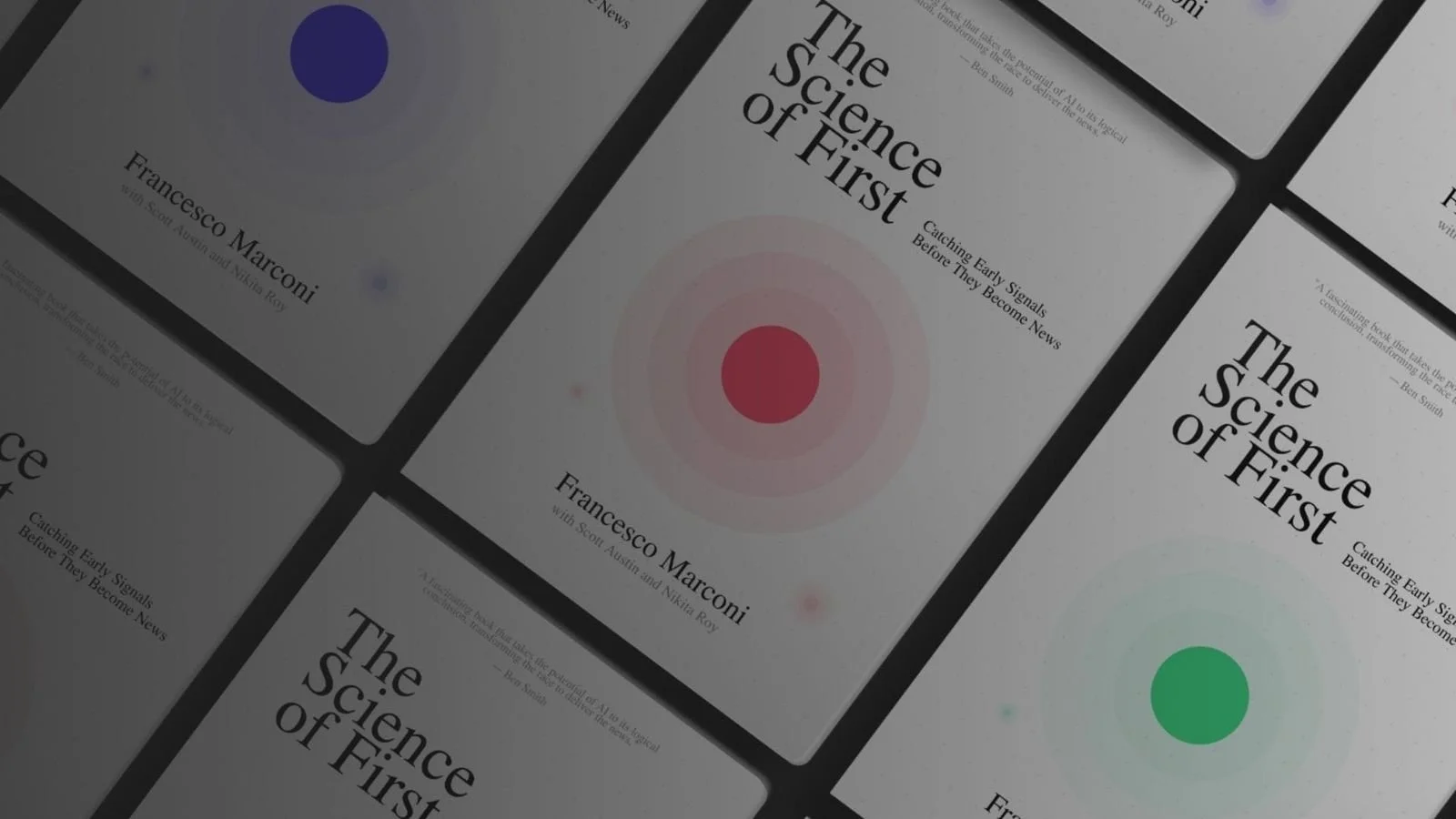
Detecting early signals is vital in a time when information moves faster than headlines, expert commentary, or research reports. “Seeing early” increasingly provides a structural advantage for those competing on timing in a volatile, AI-saturated information ecosystem. But how can we read weak signals “with precision” and turn them into clear, actionable decisions before markets and institutions fully react? This is the challenge that Francesco Marconi has set itself to meet with AppliedXL. In the interactive teaser for his book, The Science of First, AppliedXL’s co-founder and CEO emphasises that combining computational techniques with editorial judgment enables humans to act confidently on machine-surfaced signals.
AppliedXL frames its work as “visibility, not prediction”, exposing early operational shifts so investors, journalists, and executives can assess risk months in advance without relying on insider information or opaque forecasting models. AppliedXL explicitly describes its system as “autonomous news gathering” with “human oversight to mitigate AI risks,” integrating editorial principles into the design of its AI agents. The outcome is a human‑in‑the‑loop model where AI handles scale and speed in monitoring, while humans provide judgment, accountability, and final editorial control over what reaches audiences and clients.